Bringing dignity, livelihood, and opportunity to the most overlooked corners of Tamil Nadu — one village at a time.
Tamil Nadu\'s tribal communities — living in forest fringes, hills, and remote valleys — are among the most marginalised populations in the state. Cut off from mainstream development by geography, language barriers, and systemic neglect, tribal families face acute poverty, food insecurity, lack of education, and limited access to healthcare and livelihood opportunities.
Geo India Foundation\'s Tribal Village Development programme takes a holistic, long-term approach to tribal development. Rather than one-time interventions, we adopt villages — establishing ongoing relationships that address multiple dimensions of poverty simultaneously. Across 6 districts and 150+ villages, we have reached over 50,000 tribal beneficiaries in 9+ years of sustained work.
Our interventions include providing tailoring machines and training to enable home-based income generation, distributing push carts to enable micro-vending businesses, supporting children\'s education access, improving village infrastructure, and running food security programmes for the most vulnerable households.
Behind every statistic is a real person whose life has been changed. These are their stories.
Tribal Village, Villupuram District
Tailoring Machine RecipientShanthi, a mother of three from a tribal settlement in Villupuram district, had no source of independent income. Her husband worked as a daily wage agricultural labourer, and when work dried up in lean seasons, the family went hungry. She had basic tailoring skills learned from her mother but owned no machine of her own.
Geo India Foundation provided Shanthi with a tailoring machine and supported her with advanced skills training. Today, she runs a small tailoring business from her home — stitching uniforms for local school children and garments for villagers. She earns ₹5,000–₹8,000 per month, enough to feed her family, pay school fees for her children, and set aside small savings for the future.
"That machine changed my life. Now I am not dependent on anyone. My children will study." — Shanthi
Resettlement Colony, Chennai
Push Cart RecipientShayidha Banu is a widow living in a resettlement colony on the outskirts of Chennai. With two young children to support and no regular income, she survived on charitable assistance and odd jobs. She dreamed of selling vegetables and fruits but could not afford the push cart needed to start her small business.
Geo India Foundation provided Shayidha Banu with a push cart fully stocked with an initial inventory of fresh produce. She now operates a daily vegetable vending route through her colony and neighbouring streets, earning a consistent daily income. Her children are enrolled in school, and she no longer needs external support to meet her family\'s basic needs.
"I have my own business now. I am proud. I can take care of my children myself." — Shayidha Banu
Distributing tailoring machines, push carts, and other productive assets to tribal individuals — paired with skills training to ensure sustainable income generation.
Providing school kits, uniforms, and fees support for tribal children — working with families to keep children in school through scholarships and remedial education programmes.
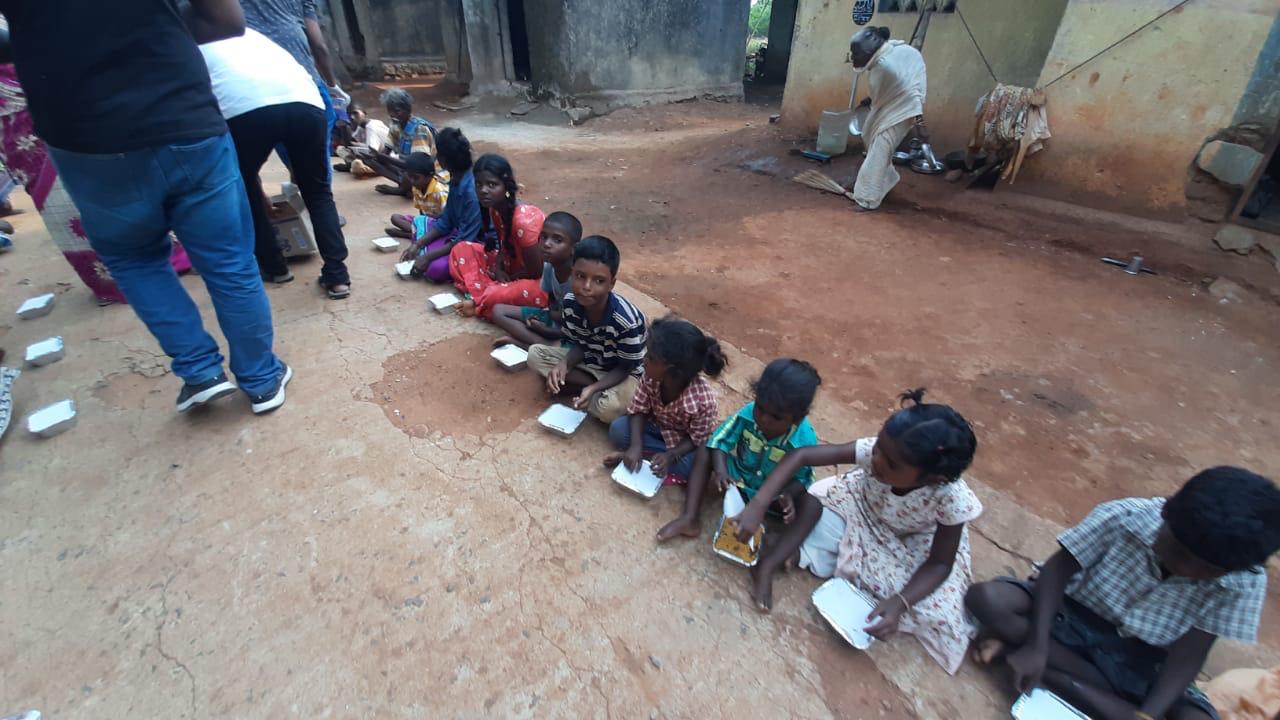
Running regular food distribution drives and nutrition support programmes for vulnerable tribal families, particularly during agricultural off-seasons and drought conditions.
Repairing community buildings, improving access roads, installing water access points, and building sanitation facilities in adopted tribal villages.
Organising medical camps, health screenings, and vaccination drives in remote tribal areas — working to close the health access gap for communities far from urban health facilities.
Building community leadership through Self Help Groups, women\'s collectives, and youth organisations that amplify local voices and enable communities to advocate for their own rights and resources.
Hundreds of tribal women have gained independent incomes through tailoring, food processing, and micro-vending — reducing family dependence on seasonal agricultural wages.
Education support programmes have increased school enrolment and retention rates in adopted villages, with more tribal children completing primary education than ever before.
Regular food support and livelihood programmes have significantly reduced periods of acute food insecurity for the most vulnerable tribal families in our programme areas.
A tailoring machine, a push cart, or a school kit can transform a family\'s life. Donate to support tribal village development or volunteer to visit and serve communities who need your presence and skills.